
What are Biomarkers? The Role of Biomarkers such as Grip Strength in Modern Healthcare
Biomarkers are measurable indicators of biological state or condition. Learn how grip strength serves as a transformative biomarker addressing traditional healthcare limitations.
Understanding Biomarkers
Biomarkers are "measurable indicators of a biological state or condition" that monitor health, diagnose diseases, predict outcomes, and evaluate treatment effectiveness. They function as objective, quantifiable measures of physiological processes at the molecular, cellular, or physiological level.
The biomarkers market shows significant growth momentum, projected to expand from $57 billion in 2025 to $97 billion by 2030, driven by increased disease prevalence, demand for early diagnosis, and expanded research funding.
Key Clinical Functions
Biomarkers enable healthcare providers to:
- Diagnose disease presence accurately
- Stratify risk for disease development or complications
- Monitor chronic disease progression over time
- Evaluate treatment effectiveness and optimize therapies
- Predict clinical outcomes including survival and disease recurrence
Why Traditional Biomarkers Fall Short
Despite revolutionizing healthcare, conventional biomarkers have critical limitations when applied to aging populations with multiple chronic conditions:
Limited Scope
Most traditional biomarkers focus on single diseases. HbA1c monitors diabetes while cholesterol assesses cardiovascular risk, failing to provide "a holistic picture of overall health" in patients with multiple comorbidities.
Reactive Nature
Many biomarkers act as trailing indicators. Elevated troponin signals heart attack only after cardiac damage occurs, and abnormal creatinine reflects kidney dysfunction only after substantial function loss. This reactive approach limits early intervention opportunities.
Lack of Functional Assessment
Traditional biomarkers neglect functional health dimensions critical to older adults: physical resilience, mobility, independence, frailty, and sarcopenia. These factors significantly impact quality of life but remain "invisible to traditional markers."
Aging Complexity
Existing biomarkers cannot distinguish between chronological and biological aging, failing to account for individual variability in healthspan and longevity.
Healthcare System Burden
The fragmented approach increases costs through reactive, late-stage interventions and creates care coordination gaps across specialties.
Grip Strength: A Transformative Biomarker
Grip strength has emerged as a powerful new biomarker that addresses traditional limitations through its ability to reflect systemic physiological changes.
Scientific Validity
Hand grip strength, measured via handgrip dynamometry, serves as a "reliable, non-invasive, and cost-effective" biomarker. It is:
- Simple and accessible: Quick to perform in hospitals, clinics, and homes using standardized dynamometers
- Reliable and scalable: Highly reproducible with low exclusion rates in large-scale studies
- Affordable: Technological advances have made devices increasingly cost-effective for widespread adoption
Clinical Applications
Risk Stratification:
- Lower preoperative grip strength predicts longer hospital stays, surgical complications, and delayed recovery
- In chronic kidney disease and COPD, reduced grip strength correlates with disease progression and mortality
- Identifies individuals at higher falls risk, especially when combined with other assessment metrics
Prognostic Power:
- Low grip strength increases all-cause mortality risk by 67%, with "each 5kg reduction in grip strength" associated with a 16% increased mortality risk
- Predicts functional decline, disability, and mobility loss
- Correlates with poor cancer treatment tolerance and survival outcomes
- Outperforms blood pressure as a cardiovascular mortality predictor
Disease Monitoring: Grip strength tracks disease progression and functional decline in chronic conditions, reflecting real-time physical health changes. Regular monitoring is integral to tracking sarcopenia, affecting 10-20% of older adults globally.
Treatment Evaluation:
- Improvements reflect rehabilitation success post-surgery and stroke recovery
- Responds to nutritional interventions targeting sarcopenia
- Monitors chemotherapy impact on muscle function
- Tracks muscle recovery and return-to-play readiness in sports medicine
Measuring Beyond Hospital Settings
Extending grip strength assessment to community and home environments enables proactive health monitoring that:
- Detects early physical decline before serious symptoms develop
- Supports targeted home-based interventions maintaining independence
- Fosters patient engagement in self-management
- Reduces healthcare costs through early detection and prevention of hospital admissions
Able Assess Platform
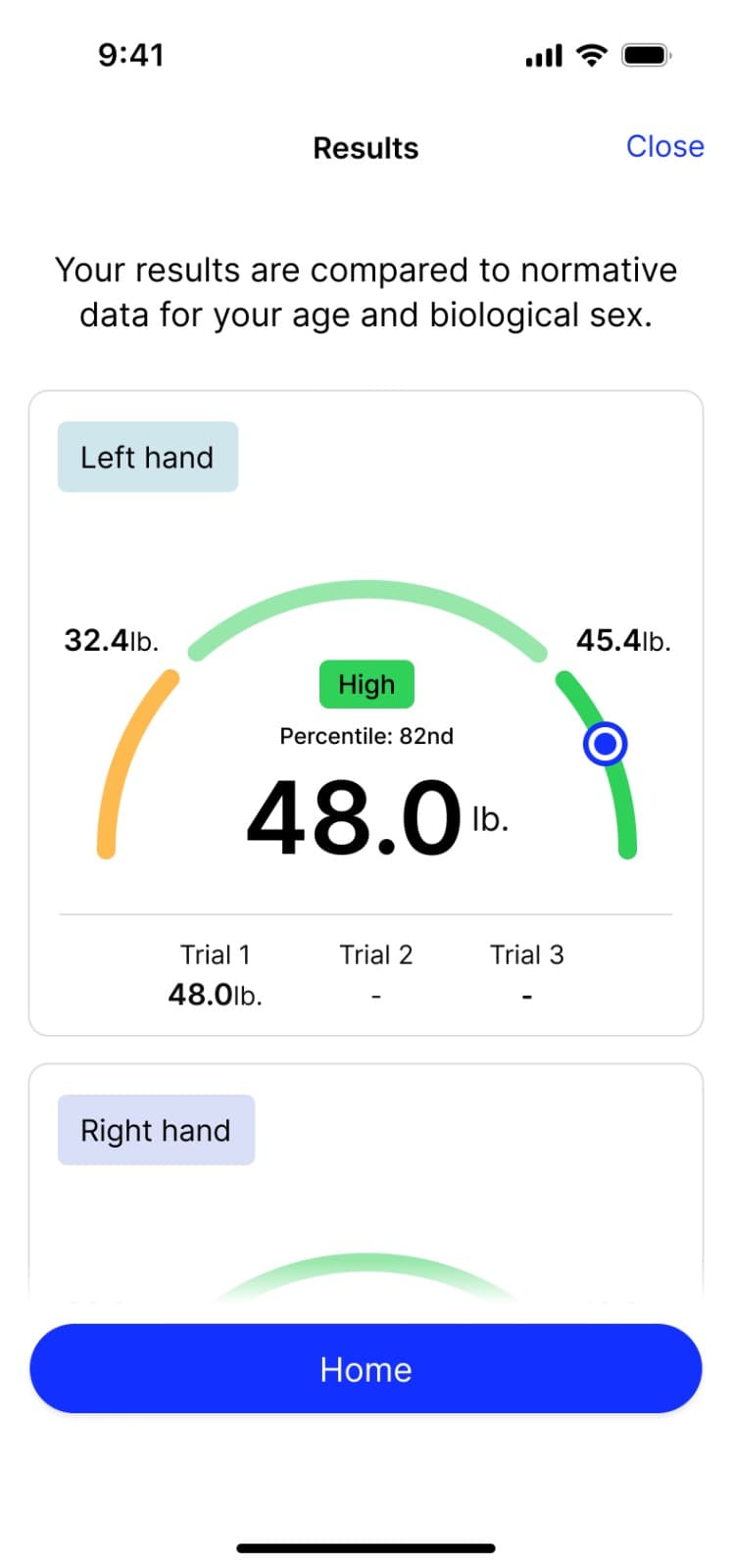
Able Care offers the Able Assess Grip Strength Platform, combining best-in-class GripAble sensors with user-friendly applications and clinician-facing portals. The Able Assess Falls Risk Screening Platform measures four key metrics including grip strength, delivering "a standardized, scalable and low-cost solution for falls prevention" implementable in under five minutes.
Key Takeaways
Grip strength represents a paradigm shift in biomarker assessment - moving from reactive, disease-specific measures toward proactive, holistic indicators of biological resilience. Its simplicity, cost-effectiveness, and strong predictive validity make it particularly valuable for managing aging populations with multiple chronic conditions, potentially transforming healthcare delivery and reducing system burdens.